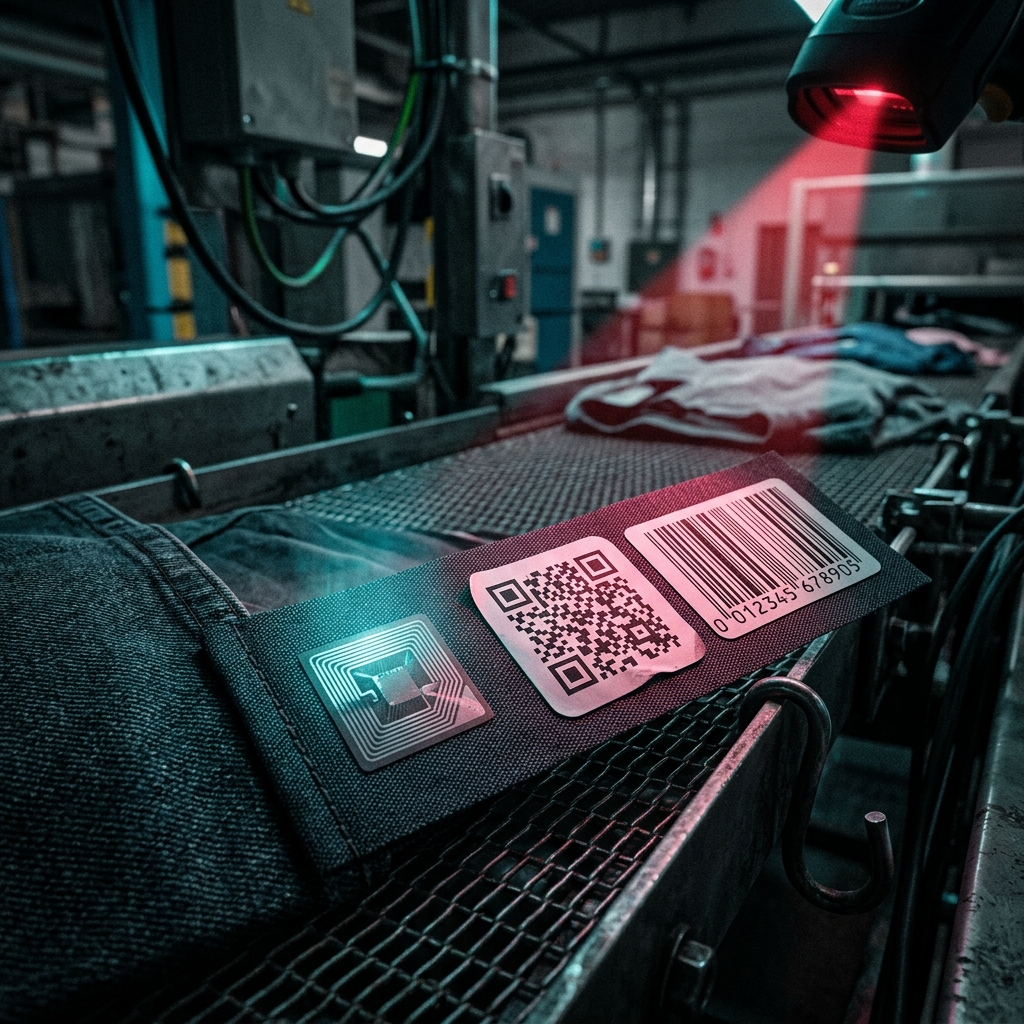
In commercial laundry, dry cleaning, and hotel linen operations, garment loss and sorting errors represent the single largest operational expense and driver of lost customers. Choosing the right tracking technology—whether thermal paper barcodes, heat-sealed synthetic QR tags, or ultra-high frequency (UHF) RFID chips—determines processing speed and inventory accuracy across retail outlets and central factories.
Detailed Technology Breakdown
| Comparison Metrics | Thermal Barcodes | Waterproof QR Code Tags | Flexible UHF RFID Tags |
|---|---|---|---|
| Unit Cost per Tag | ₹0.20 - ₹0.50 (Paper roll) | ₹1.50 - ₹3.00 (Synthetic strip) | ₹15 - ₹28 (Reusable 200+ washes) |
| Scan Method | Direct optical line-of-sight laser | Camera optical line-of-sight 2D scan | Non-line-of-sight bulk radio frequency (1-5 meters range) |
| Throughput Speed | 1 garment at a time (~3 secs/item) | 1 garment at a time (~1 sec/item) | Bulk scan 300+ garments in 1 second |
| Wash Durability | Single wash cycle (Disposable) | Multi-wash (5-20 cycles) | Industrial grade (200+ wash, extract, 180°C press cycles) |
| Optimal Business Size | Single store retail dry cleaners | Growing 2-5 store laundry chains | Hotels, hospitals, commercial laundries, large franchises |
1. Thermal Paper Barcodes: Low Cost, High Manual Friction
Paper barcodes are printed at counter check-in and attached using safety pins. While tag costs are minimal, staff must manually locate and scan each barcode individually. Furthermore, paper tags often tear, detach, or fade inside industrial washing drums, leading to lost item disputes.
2. Heat-Sealed QR Codes: Durable & Budget-Friendly
Synthetic QR tags are heat-pressed onto garments using a small tabletop patch machine. They withstand multiple wash cycles and can be scanned using low-cost Android handheld devices or Bluetooth scanners. QR tags offer an excellent balance of durability and low operational expense for growing retail dry cleaning brands.
3. UHF RFID Tags: Ultimate Speed & Zero-Touch Automation
Flexible Textile UHF RFID tags represent the state-of-the-art in laundry logistics. Chips are woven inside heat-resistant silicone or fabric tags. RFID readers mounted at factory doorways scan entire laundry hampers or van deliveries in seconds without unpacking garments, saving hundreds of labor hours monthly.
Frequently Asked Questions
Q1: Can RFID tags survive dry cleaning chemicals?
Yes. Industrial laundry RFID tags are rated IP68 and engineered to withstand perchloroethylene, hydrocarbon solvents, 60-bar extraction pressure, and 180°C steam ironing.
Q2: Does SynxWeb support all three tagging systems?
Yes. SynxWeb Laundry SaaS includes native drivers for thermal printers, 2D QR scanners, and UHF RFID readers in a single unified dashboard.
Conclusion
Selecting the ideal garment tracking system depends on your operational volume. For single retail outlets, synthetic QR tags provide optimal efficiency. For multi-store chains and commercial suppliers, UHF RFID tags deliver dramatic labor savings and zero garment loss. Learn More About SynxWeb RFID Hardware Integration →
Need Custom Technical Solutions?
At SynxWeb, we engineer high-performance systems, custom integrations, and custom database APIs built to scale. Discuss your technical roadmaps with us.